Back

Designing intuitive learning experiences for early readers
Created a pirate-themed literacy game for early readers, combining exploration, vocabulary practice, reflection, and rewards into a repeatable learning experience.
Timeline
8 Week Design Sprint
(February – April 2025)
Role
Product Designer
Focus
0 → 1
EdTech
Interaction Design
Back8 Week Design Sprint
Designing vocabulary learning through play
Created a pirate-themed literacy game for early readers, combining exploration, vocabulary practice, reflection, and rewards into a repeatable learning experience.
Timeline
8 Week Design Sprint
(February – April 2025)
Role
Product Designer
Focus
0 → 1
EdTech
Interaction Design
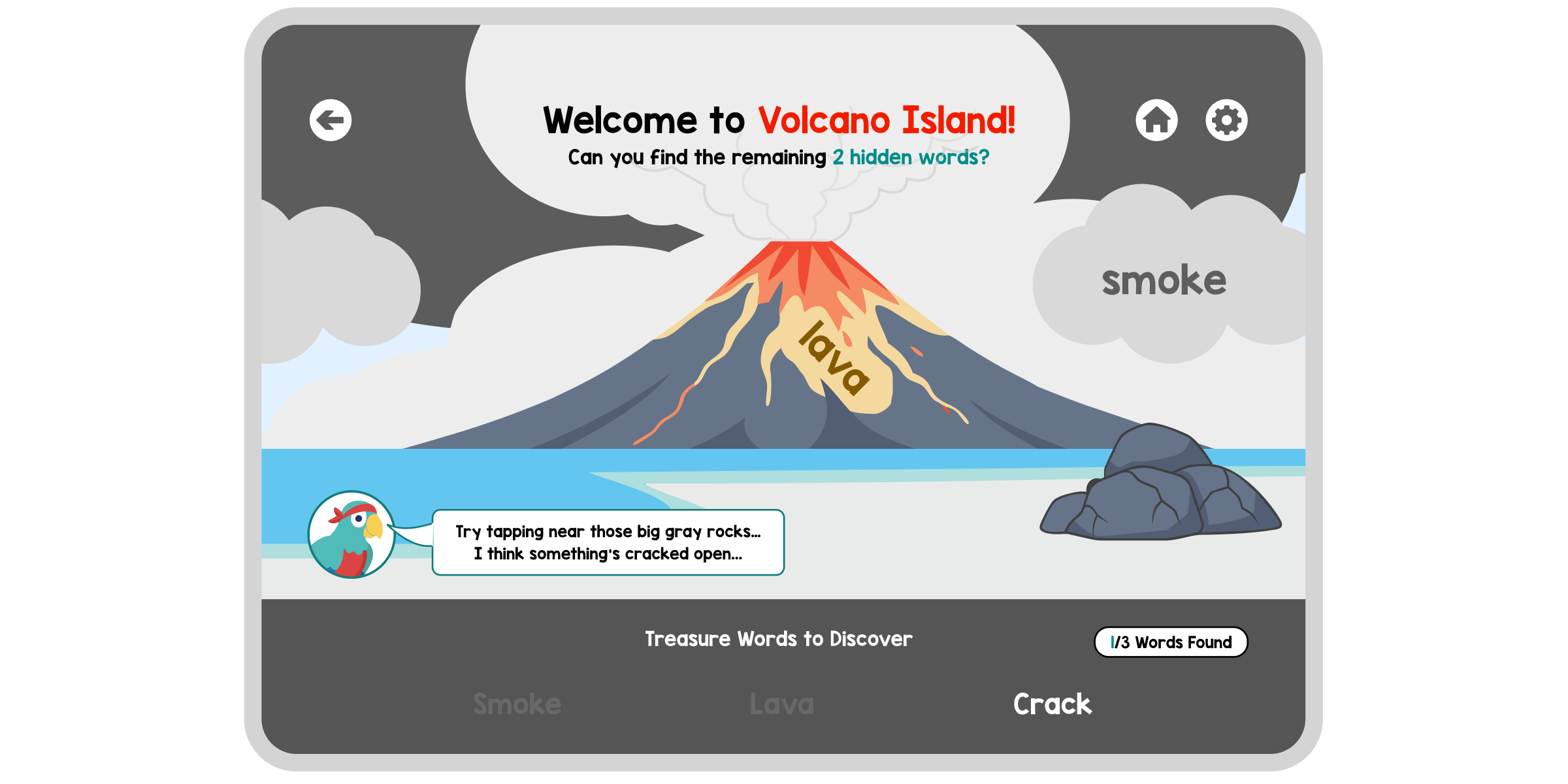
Explore each island to discover hidden vocabulary words.
playtesting meteics
Testing with children reshaped both the interactions and the target audience
2 formal playtests | Ages 6 & 9 | Target refined from 5–9 → 5–7
The Goal
Help early readers learn new vocabulary through exploration rather than drills.
Pirate Word Hunt turns vocabulary practice into a pirate adventure where children discover words, practice them through mini-games, reflect on their meaning, and earn rewards.
playtest insight
Kids didn't need more content. They needed clearer guidance.
Testing revealed hesitation around starting the spelling activity, understanding the sorting interaction, and responding to reflection prompts independently.
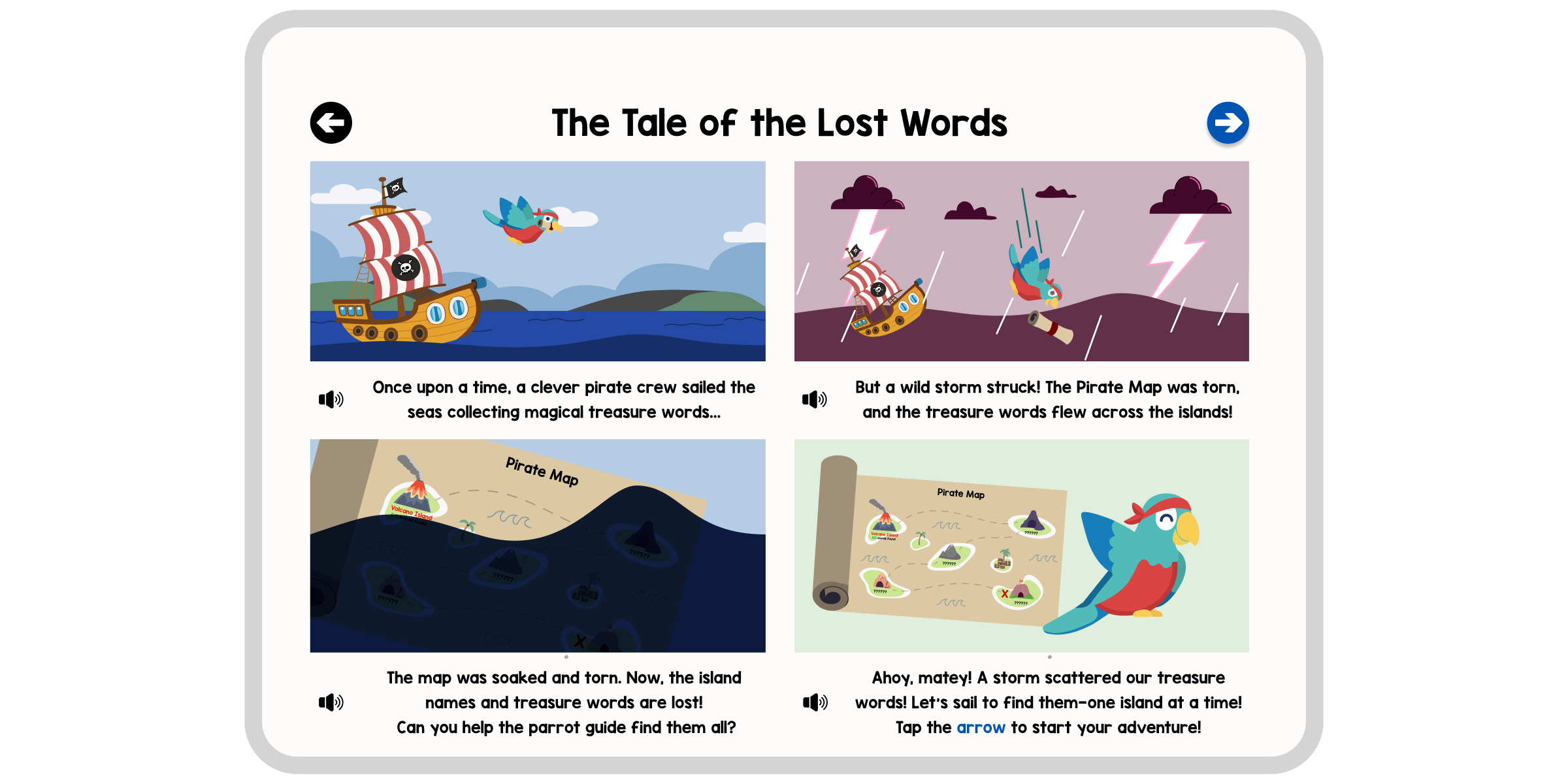
A short illustrated story introduces the adventure and gives players a reason to start exploring.
Making the first action obvious
During testing, my 6-year-old participant didn't initially know where to begin the spelling activity.
I added clearer prompts and visual guidance to show players what to do first.
Clearer first-time guidance
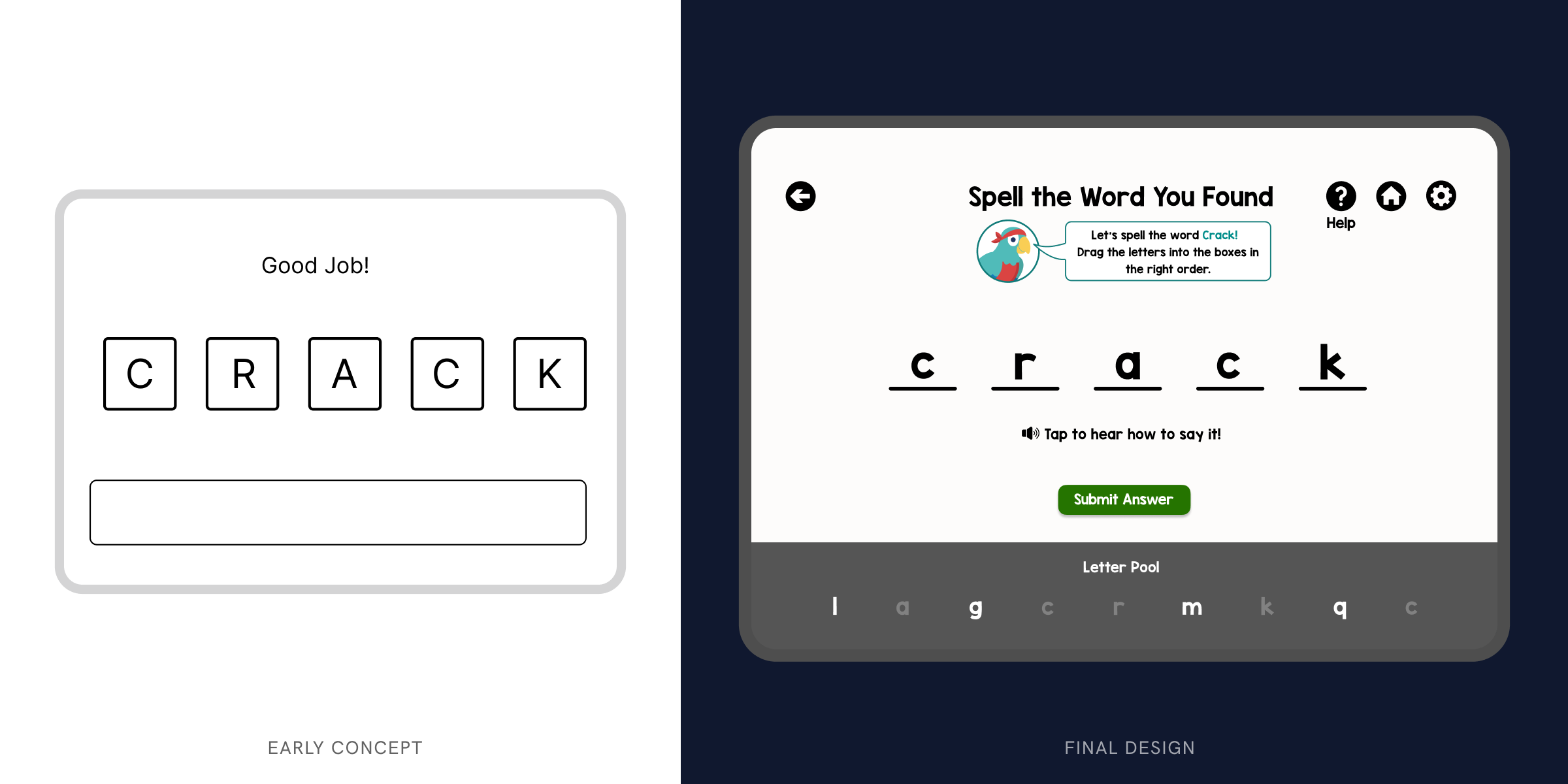
The spelling activity evolved from a basic exercise into a guided, kid-friendly interaction.
Clarifying how each activity works
Players hesitated when first encountering the sorting activity.
I refined instructions and visual cues so children could understand what actions were expected without relying on adult guidance. Both participants initially hesitated on the real-vs-silly sorting task, which led to clearer wording, color coding, and consistent iconography.
Designed for independent play
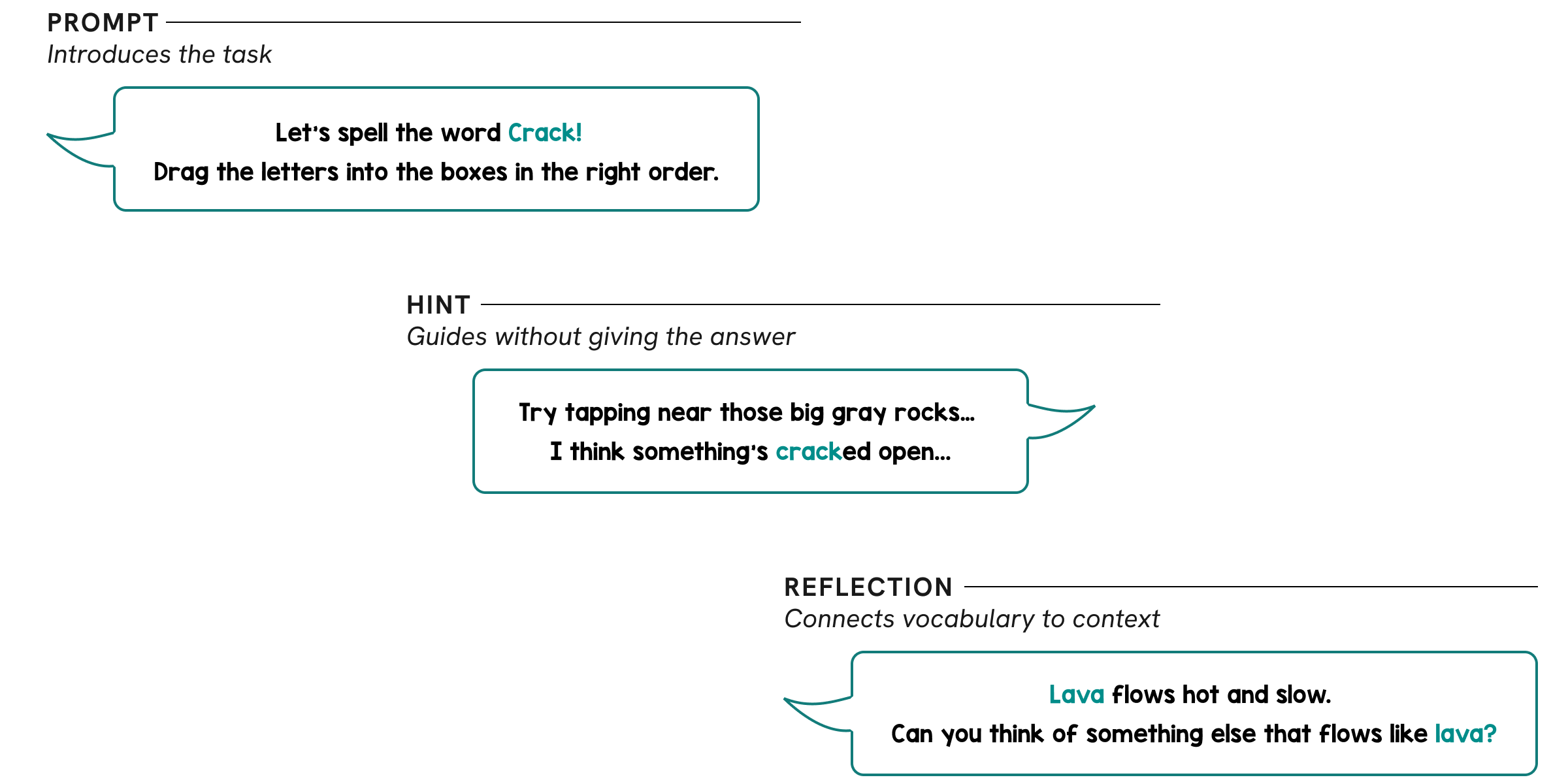
The parrot guides players through each activity with instructions, hints, and reflection prompts.
Scaffolding learning through modeling
My younger participant could answer reflection questions after hearing an example, but struggled to respond independently.
I used the parrot as a guide that could model responses, provide hints, and support children without immediately giving them the answer.
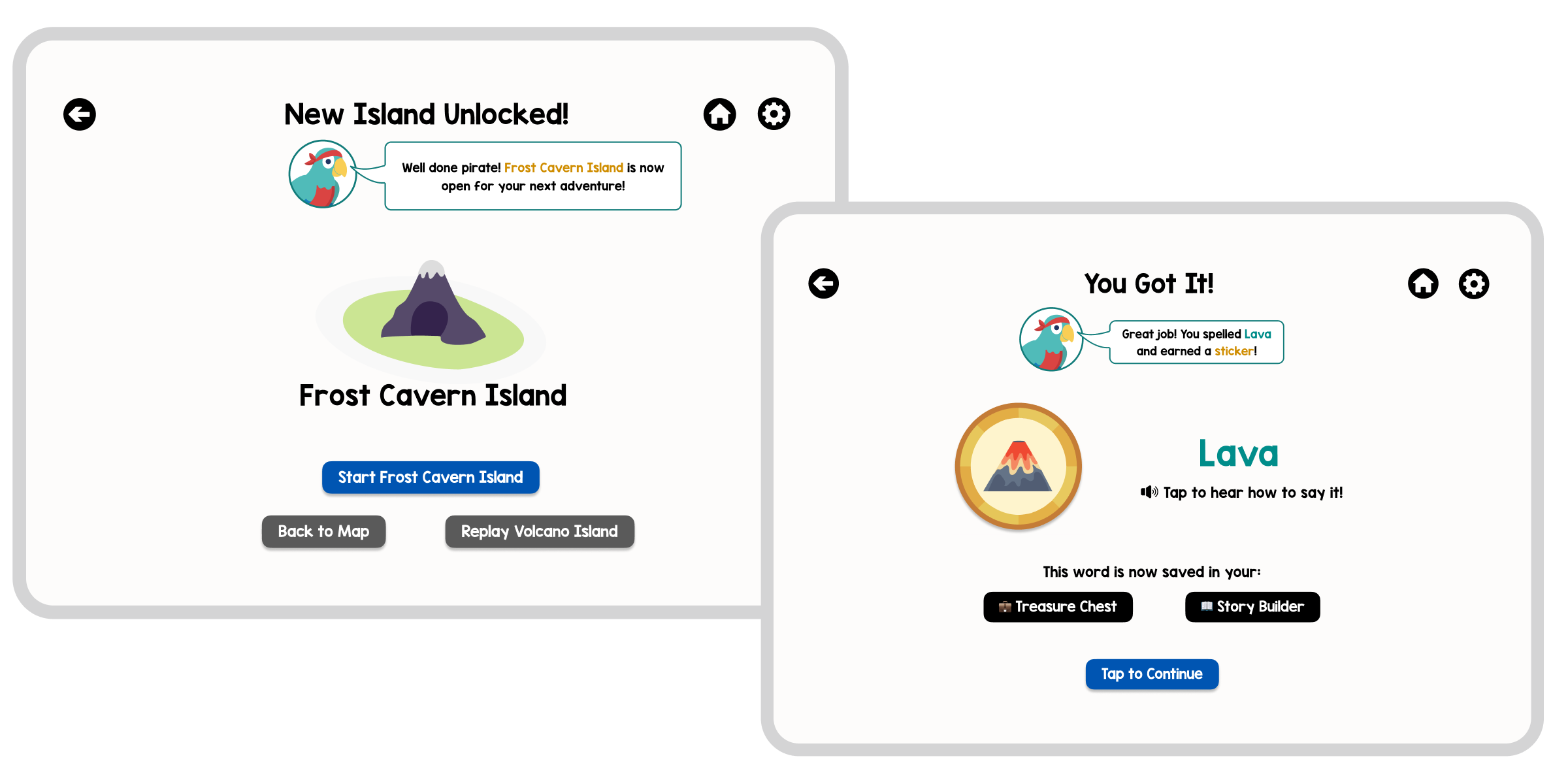
Completing activities earns stickers and unlocks new islands to explore.
Turning progress into motivation
Both children responded strongly to collecting stickers and unlocking rewards.
I reinforced progress through stickers, badges, and island unlocks, giving learners a visible reason to continue practicing.
The Learning Loop
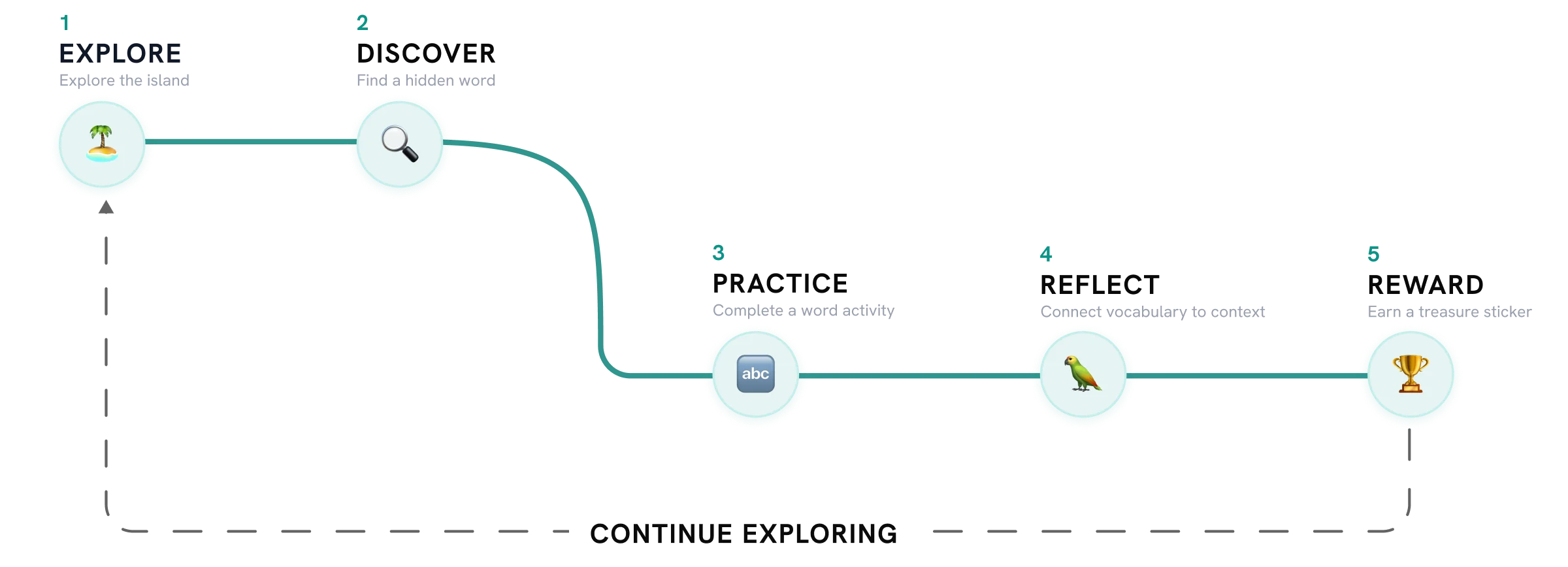
Each new word follows the same loop: explore, discover, practice, reflect, and earn a reward.
Turning individual activities into a repeatable learning experience
Each new vocabulary word follows the same structure, helping children learn the interaction pattern while practicing different literacy skills.
reflection
Designing for children taught me that independence has to be designed for.
What feels obvious to an adult may not be obvious to a six-year-old.
Testing with children taught me to be more intentional about scaffolding, feedback, and when to step back and let the learner figure things out.
Testing with children taught me to be more intentional about scaffolding, feedback, and when to step back and let the learner figure things out.